Showing posts with label History. Show all posts

Tuesday, November 3, 2015

THE HISTORY OF RIVER PLATE


The club was created in a neighborhood called La Boca in the year 1901. It’s the fusion of the clubs 'Santa Rosa' and 'La Rosales', and it adopted the name River Plate. The club had its stadium in Sarandí for a short time, and then the club moved to Recoleta where it had its own stadium.
After that, the club grew and because of that it had to move to Belgrano, where it is nowadays.

The stadium's official name is 'Antonio Vespucio Liberti' but it's called 'El Monumental': it's the biggest stadium in Argentina and the sixth in America with a capacity for 61321 people and it's where the National Football Team plays its matches.


The club is one of the 'Five Giants' of Argentine football, since the AFA implemented the proportional vote in 1937 which consists in giving more power of decision to the biggest and oldest clubs.

River Plate has a strong rivalry with the club Boca Juniors; the 'Superclásico' is the name that was given to the matches in which they faced each other being these the most important sports events in the country.

The greatest achievement that River Plate obtained was when it was named the World Champion after winning the match against the club 'Steaua de Bucarest' of Rumania in the national stadium of Tokio, in the final of the Intercontinental Cup. Thanks to that, River Plate is one of the 29 teams in the world that have won the maximum football championship of clubs.

River Plate is the biggest winner in the history of Argentine football with 56 titles. In its country, the club has the record of winning 36 championships of the first division. Furthermore, the club has got the title of champion in 8 national cups and 15 international titles.

River Plate is at the top of the historical table of the first division of Argentine football, because it is the club with the biggest number of matches won and goals scored. In addition, it is the club with less matches lost and less goals received, and it is the team which has won more times a 'Tricampeonato'.

Emiliano Colombo, Franco Henríquez, Ignacio Lauzao and Facundo Paiz - 4th Year

Monday, October 5, 2015

THE BIRTH OF FOOTBALL


In the late Middle Ages and the following centuries, the British Isles and surrounding areas developed a kind of game that would be World-wide famous: two groups of people run after a ‘ball’ (made of different materials and sizes) trying to kick it into the opposite’s team scoring zone.

This practice had no rules whatsoever until the second half of the seventeenth century. At that time, a great unification of the previous ‘football codes’ was done and different types of football were born: rugby football, American football, Australian football…today just known as ‘FOOTBALL’.

But, Europe was not the only place where this game was developed. In South America, games where a ball was driven with the feet also were practiced.

The Spanish Jesuit José Manuel Peramás –who lived in San Ignacio Miní, a Jesuit reduction of Indians under Catholic care- wrote in his personal journal –later published as ´De Vita et moribus tredecim virorum paraguaycorum’ (or ‘The life and customs of the thirteen Paraguayan’)- a description of the game: 
‘They used to play with a ball which, although rubber filled, was so light and fast that every time they hit it, it continued bouncing for some time, without stopping, driven by its own weight.  They don’t throw the ball with their hands, like us, but with the top of the bare foot, passing it and receiving it with great agility and precision’.
There is a theory that suggests that football was first played in South America, especially among the Guaraní people.

However, football was first ruled in Britain. The British Codes were characterized for its few rules and extreme violence. One of the most popular carnivals was ‘soccer’ (and one of the most violent ones) which was prohibited by decree of King Edward III and remained forbidden during 500 years.


Nevertheless, the British Codes were taken in different cities and evolved towards a less violent game. One of the most popular games was the Florentine Calcium, originally from Florence, Italy. This sport influenced what we today know as football, not only with its rules, but also –and most important- with the party atmosphere in which these games were (and are) played. 

Nowadays, football is one of the most popular sports. We watch it, we play it, we argue about it, we even fight about it...but most of all, we LOVE it! 

Lautaro Romano García and Ariel Condori - 5th Year

Monday, September 28, 2015

A BRIEF HISTORY OF FERNET BRANCA

We’d like to honor one of the favourite cocktails of the Argentineans. Everyone in Argentina has tried –at least once- a ‘Fernet con Coca’ (which means ‘Fernet and Cola’). Some like it strong, others prefer it softer; but it’s a fact that most people who like to drink alcohol, like to drink Fernet. 


This famous drink is great because it combines two ingredients: Fernet and Cola (duh!): the first one is very bitter and it’s balanced with the sweetness of cola. So, if you are someone who likes bitter drinks, you can prepare it with more Fernet than cola (or even just Fernet with soda water); if you like sweet drinks, you can prepare it with more cola and you’ll be drinking a smooth drink with a trace of a bitter taste. 

Its popularity never stops growing, especially among teenagers and young adults. 

But… where did it all start? 

Fernet is an Italian type of amaro with a bitter aromatic spirit. Fernet’s smell is described as ‘black licorice-flavored Listerine’. It’s very popular in Argentina, where production is around 25 million liters: 30% is sold in Buenos Aires and its capital city; 30% is sold in Córdoba and the rest around the country. 

Fernet can be mixed into different cocktails. It can replace bitters in recipes, for instance: the Fanciulli cocktail is a Manhattan with Fernet instead of Angostura bitters. 

It was made in Milan, Italy, by Bernardino Branca. It was mainly for medical use, but people used to drink it. He realized that he could earn more money by selling it as an alcoholic drink (this is similar to the Coke-Cola story: it was first sold as medicine and then as a regular drink. Maybe that’s the reason why they are so good together). 

This year marked the 170th anniversary of Fernet Branca’s first appearance. We are all familiarized with its symbol.

However, do you know how that famous image was born?


An eagle holds a bottle of Fernet Branca while flying around the world. The logo –which over the years became the symbol of the company- has an important source: the author is Leopoldo Metlicovitz, born in Tiesta in 1868. He is a reference for many young artists like Marcelo Dudovich. 

After a few years of use, the official logo was inscribed in the Ministry of National Economy of Italy, in 1905. 

Although in Argentina is the most famous drink, lots of celebrities have claimed to like it:
Angel Cabrera (a golf player) says he loves it. In the movie ‘The Dark Knight Rises’, you can see Alfred (Bruce Wayne’s assistant) order a Fernet in a bar. This is also done by Hugh Laurie in the series ‘A bit of Fry and Laurie’


Fernet is considered the drink of friendship (right after beer). In Argentina, you don’t go to a friend’s house and drink a gin-tonic with friends. You drink Fernet (or a beer, of course). 

Fernet and Cola is the drink that Argentineans choose to share with friends and loved ones. That’s why it means a lot for us; because Fernet is like a symbol that reminds us a lot of cool experiences that we had together. 

Cheers!! 

Brian Ferrari, Facundo Silva, Gabriel Maiolo and Ignacio Morales- 5th year

Thursday, September 24, 2015

THE HISTORY OF BOCA JUNIORS


Boca Juniors was founded in the year 1905 in Buenos Aires.

Since the beginning of Boca Juniors, football is the most important sport. From 1905 to 1930 the club was amateur, then it became professional.

Is the second institution with the most amount of international titles of the world…but, how did it all start? 

The foundation of Boca Juniors was a work of six teenagers, children of Italians and neighbors of La Boca, neighborhood of immigrant workers and strong Genoese identity –‘xeneize’ in its dialect-: Esteban Baglietto, Alfredo Scarpatti, Santiago Pedro Sana, Tomás Movio and the brothers Juan Antonio Farenga and Teodoro Farenga.

The club recognized Esteban Baglietto as its first president. Esteban was born in 1888 in Buenos Aires -though his parents were Genoese- in the bosom of a very humble family. He was the first president of the institution and also a player of the first team.

The certain thing is that it turns out to be inappropriate to speak about a president since –back then- Boca Juniors was just a boys' team joined by the only desire to play football; very distant from answering to an institutional worry or to an organization with legal status.

The first football team was formed by eleven players who, by that first participation, have a place in history. Some of them were the following: 
De los Santos (goalkeeper), Vergara and Cerezo (defenders), Priano, Antonio Farenga and Bacigaluppi (scorers).


THE SUPER-CLASSIC

The super-classic of Argentine Football is the match in which the two most popular football teams play against each other: Boca Juniors and River Plate. The first official super-classic was disputed on August 24, 1993: River won 2-1 to Boca.

The ‘Super-classic’ of Argentine football is the party that faces the most popular soccer teams of the country: River Plate and Boca Juniors. This sports’ spectacle concentrates the attention of the big masses not only in Argentina, but in many countries of the world. 

Very few international matches have the heat, the color, and the vibration of a River-Boca: the previous reunion of friends, sharing food and beer, the coffee conversations over the match, the discussions between ‘xeneizes’ and ‘hens’, everything is part of the best folklore that football has to offer to fans. 

This rivalry began at the beginning of the 20th century when the above mentioned clubs were sharing the neighborhood of La Boca.


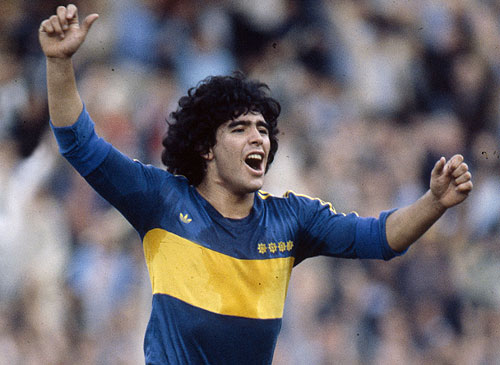
The most important players throughout the history of Boca Juniors are:


Juan Román Riquelme

Diego Armando Maradona

Gabriel Batistuta

Carlos Tévez


Martín Palermo

Bruno Blas, Felipe Tozzini and Agustín Converso - 3rd Year


Tuesday, September 22, 2015

A HISTORY OF HORROR FILMS - PART I

Horror is a film genre seeking to elicit a negative emotional reaction from viewers by playing on the audience's primal fears. Inspired by literature from authors like Edgar Allan Poe, Bram Stoker and Mary Shelley, horror films have for more than a century featured scenes that startle the viewer. The macabre and the supernatural are frequent themes; as a result they may overlap with the fantasy, supernatural, and thriller genres.

Horror films often deal with the viewer's nightmares, hidden fears, revulsions and fright of the unknown. Plots within the horror genre often involve the intrusion of an evil force, event, or personage, commonly of supernatural origin, into the everyday world. Prevalent elements include ghosts, aliens, vampires, werewolves, demons, gore, torture, vicious animals, evil witches, monsters, zombies, cannibals, and serial killers. Conversely, movies about the supernatural are not necessarily always horrific.

Since this is one of the most popular genres among cinemagoers, we decided to investigate about famous films from the moment of its invention to the 1950’s.

1890-1920s 

The first depictions of supernatural events appear in several of the silent shorts created by the film pioneer Georges Méliès in the late 1890s, the best known being Le Manoir du Diable, which is sometimes credited as being the first horror film. Another of his horror projects was 1898's La Caverne maudite. Japan made early forays into the horror genre with Bake Jizo and Shinin no Sosei, both made in 1898. In 1910, Edison Studios produced the first film version of Frankenstein, which was thought lost for many years. Edison's version of Frankenstein followed the 1908 film adaptation of Dr. Jekyll and Mr. Hyde, the first of many film adaptations of Stevenson's 1885 novel, in a slue of other literary adaptations including the works of Poe, Dante, Shakespeare and many other authors. This trend instilled a macabre element intro these early films and made it synonymous with the horror film genre. 

The second monster to appear in a horror film: Quasimodo, the hunchback of Notre Dame, who had appeared in Victor Hugo's novel, Notre-Dame de Paris (1831). Films featuring Quasimodo included Alice Guy's Esmeralda (1905), The Hunchback (1909), The Love of a Hunchback (1910) and Notre-Dame de Paris (1911). 

German Expressionist film makers, during the Weimar Republic era and slightly earlier, would significantly influence later films, not only those in the horror genre. Paul Wegener's The Golem (1920) and Robert Wiene's The Cabinet of Dr. Caligari (also 1920) had a particular impact. 
The first vampire-themed movie was made during this time: F. W. Murnau's Nosferatu (1922), an unauthorized adaptation of Bram Stoker's Dracula. The Man Who Laughs (1928), based on the Victor Hugo novel of the same name, released by Universal Studios shows the influence German Expressionism had on early American horror films. 


Hollywood dramas used horror themes, including versions of The Hunchback of Notre Dame (1923) and The Monster (1925) both starring Lon Chaney, the first American horror movie star. Other films of the 1920s include Dr. Jekyll And Mr Hyde (1920), The Phantom Carriage (Sweden, 1920), The Lost World (1925), The Phantom Of The Opera (1925), Waxworks (Germany, 1924), and Tod Browning's (lost) London After Midnight (1927) with Chaney. Another great film from this period is, also a Browning/Chaney collaboration, The Unknown (1927). These early films were considered dark "melodramas", the word "horror" to describe the film genre would not be used until the next decade after Universal Pictures released Dracula (1931) and Frankenstein (1931). These films were grouped in with melodramas because of their stock characters and their emotion heavy plots that focused on romance, violence, suspense, and sentimentality.

The trend of inserting an element of macabre into these pre-horror melodramas was continued into the 1920s. Directors known for putting a large amount of macabre into their films during the 1920s were Maurice Tourneur, Rex Ingram and Tod Browning; many of his works have already been mentioned above. The Magician (1926), a Rex Ingram film, provides one of the first examples of a "mad doctor" and it is said to have had a large amount of influence on James Whale's version of Frankenstein. The Unholy Three (1925) starring Lon Chaney and directed by Tod Browning is a great example of Browning's use of macabre and shows his own unique style of morbidity. Browning remade the film in 1930 as a talkie which also starred Chaney and it became the actor's only sound film.

The Terror (1928) was the first horror film with sound.

1930s–1940s

During the early period of talking pictures, the American Movie studio Universal Pictures began a successful Gothic horror film series. Tod Browning's Dracula (1931), with Bela Lugosi, was quickly followed by James Whale's Frankenstein (also 1931) and The Old Dark House (1932), both featuring Boris Karloff as monstrous mute antagonists. Some of these films blended science fiction with Gothic horror, such as Whale's The Invisible Man (1933) and, mirroring the earlier German films, featured a mad scientist. These films, while designed to thrill, also incorporated more serious elements. Frankenstein was the first in a series which lasted for many years, although Karloff only returned as the monster in Bride of Frankenstein (1935). The Mummy (1932) introduced Egyptology as a theme for the genre.

Other studios followed Universal's lead. Tod Browning made the once controversial Freaks (1932) for MGM, based on "Spurs", a short story by Tod Robbins, about a band of circus freaks. Rouben Mamoulian's Dr. Jekyll and Mr. Hyde (Paramount, 1931), was remembered for its use of color filters to create Jekyll's transformation before the camera. Michael Curtiz's Mystery of the Wax Museum (Warner Brothers, 1933), and Island of Lost Souls (Paramount, 1932) were all important horror films.


With the progression of the genre, actors were beginning to build entire careers in such films, most especially Boris Karloff and Bela Lugosi.

Frankenstein (1931)


After Lugosi turned the part down, screen legend has it that Boris Karloff was plucked from obscurity in the studio canteen to play the Monster. Studio executives thought his character was so peripheral to the movie that they did not even invite him to the premiere, yet it is his lumbering, pathetic creation that is now synonymous with Frankenstein. James Whale, still numbered amongst the best horror directors of all time, directs with great attention to both spectacle and detail.


The Mummy (1932)


The Tutankhamen Exhibition toured the world in the 1920s and 1930s, and the concept of Egyptologists suffering the effects of an ancient curse was part of contemporary urban legend. Audiences were fascinated by the concept of 3000 year old remains, and the Ancient Egyptians' rituals that ensured immortality. The film, which may seem overly slow-moving to modern viewers, introduced the concept of the desert escape and terrible, ancient evil to movie audiences. 
The main action takes place in Cairo (or the Universal backyard’s version of that city) and revolves around a mummy who is brought to life by the accidental reading of a spell. He then hunts down the reincarnation of his lost love, only to be thwarted, and reduced to the dust from whence he came. The storytelling is slow and atmospheric, and, as with all Karloff characters, the monster is imbued with a sense of tragedy. Its influence can be seen in assorted films like The English Patient (The Mummy revolves around a similarly tragic love story) and... um... Stargate.

The reboot of the franchise in the 2000s focuses more on blockbuster action sequences, but it's interesting to note that both Clive Barker and George A. Romero were attached to the project as directors at some stage. It would have been interesting to see this property regenerated as low-budget horror rather than a multi-million dollar special effects festival.


Camila Fernández, Micaela Rolle and Belén Rivera Tola - 4th Year

Tuesday, September 15, 2015

ARGENTINA AND THE WORLD CUPS - PART 1

Every four years, Argentineans feel our passion for football renewed: the World Cup begins. 
Despite being known worldwide for our fanatism for this sport, World Cups bring people together and awake a love for our country that seems to be asleep the rest of the time.
With the idea of remembering those lovely feelings, we decided to start a journey along the history of our glorious National Team. 

1930 World Cup
Argentina began its history in football with a final of the World Cup. It started with “the Battle of the Centenary”. Argentina participated like a guest together with 11 more teams. The World Cup was in Uruguay and the first match was on July 15, 1930 in the stadium “Big Central Park of Montevideo”, against France. In the first 10 minutes, the defender Luis Monti scored the only goal in the match. 
The Brazilian referee Almeida Watered, made a mistake and finished the match 6 minutes earlier. This made the audience angry, who invaded the area and Argentine players were insulted. 
After that, Argentina played against the Mexican team. Nevertheless, Argentina managed to win 6-3 and it became an easy match. We won with three goals of Guillermo Stábile, two goals of Adolfo Zumelzú and one of Francisco Varallo. 
In quarter finals it had to play against Chile, and Argentina managed to win 3-1 with goals of Guillermo Stábile and one of Mario Evaristo, while Guillermo Subiabre scored the goal of Chile. 
We can say that these teams weren´t as good as the Argentinian team, Then, the team had to play against the United States, and its game wasn´t good. Argentina won 6-1, easily. 
With players as Guillermo Stábile, Carlos Peucelle, Fransisco Varallo and Luis Monti, we couldn´t beat Uruguay and we finished in second place.

1934 World Cup
Without the best football players, Argentina went to Italy with a football team of the amateur association, formed by teams that weren´t as good as the professionals and they played in a lower level. Italy won the title with Argentina´s help, because Italy had Monti Luis, Demaria Atilio, Raimundo Orsi and Enrique Guaita. Argentina was eliminated by Sweden during the first round.

1938 World Cup
In the rotation for being host between Europe and South America, Argentina had to be such hostess of the World Cup but FIFA gave it to France. Argentina decides not to participate and received the support of American countries as Colombia, Costa Rica, El Salvador, the United States, Dutch Guyana, Mexico and Uruguay. Brazil decided to play because it was going to be the hostess of the world cup of 1942.

1942 and 1946 World Cups
The World Cups of 1942 and 1946 were suspended due to the World War 2

1950 World Cup
Argentina wasted a marvelous generation, because of differences with the CBF. Argentina generated a big stir after announcing that it wouldn´t participate of the World cup due to existing differences between the AFA and the Brazilian Confederation of Football (CBF). The problem was born in 1949 when Brazil organized a South American Championship and Argentina didn´t participate. The CBF prohibited the Brazilian teams to dispute matches against the Argentinians. 
On the other hand, the people attribute the possibility that the decision was made by Juan Domingo Perón, when Valentín Suárez, who was deeply wishing his national team participate in the mentioned tournament, couldn´t assure its national victory.
When the World Cup finished, the Brazilian president Vargas, who in spite of the problems that existed between the Football Federations of both countries, had an excellent relation with its companion Juan Perón, he designated Bautista Luzardo as the ambassador of Brazil in Buenos Aires, and he was going to try to solve the problem.

1954 World Cup
For the same reasons like in the World Cup of 1950, the Argentinian team didn´t participate. Nevertheless, the AFA sent Guillermo Stabile as an observer, who as soon as the tournament was finished, he returned to the country, and declared: "If Argentina had gone, it would have had an out-standing performance".

1958 World Cup
After three World Cups without participating, Argentina returned to the game. Argentina, hadn’t participate in the World Cups, so the people believed that they were the best, simply because the names of the players were formals. For 10 years the Argentinians thought that the team would win easily this World Cup, for its large number of good players. But, regrettably, this didn´t happen. Argentinina lost 3-1 with Germany, and 6-1 with Checoslovaquia. It was a very hard defeat for Argentina’s team, with Guillermo Stabile as its coach. 
In this team, were figures of the "Machine" of River like Amadeo Carrizo and Ángel Labruna; high quality players as Omar Orestes Corbatta or José Manuel Ramos Delgado (Lanús football player and then Pelé's partner in the Santos´s team) and notable scorers as José Sanfilippo, who was in Boca and San Lorenzo. All of them were thinking that Argentina was going to manage its first conquer. When Argentina returned there were 10. 000 people in the Airport of Buenos Aires to insult them. This as many players admitted was a big show-off..

1962 World Cup
Argentina's football team was one of the 16 participants of the World Cup of football of 1962, which was held in Chile. Argentina classified to the World Cup of Chile, first in its group, in the South American qualifying rounds. Although Sanfillipo was in the Argentina, it could score only 2 goals Against Bulgaria and England. In the group, Argentina lost against England and couldn´t qualify.This World Cup was won by Brazil with Garrincha and Pelé.

1966 World Cup
The Selection of Argentina was one of the 16 participants of the World Cup of 1966, which was held in England. Argentina classified straight to the World Cup. They had the first place in its group for the South American classification. In the house of the inventors of football, with the team formed by Juan Carlos Lorenzo (Artime, Perfumo, Ermindo Onega, Marzolini, Albrecht, Rome, etc ) Argentina had two victories (2-1 against Spain and 2-0 against Swiss) and a douse with Germany. Argentina lost with England, and then it won the World Cup against Germany, but for many, the World Cup was arranged.

1970 World Cup
For the only time in its history, Argentina was left out during the classification stage. Things were “weak” from the beginning. The team turned with two defeats of its commitments in La Paz (1-3) and in Lima (0-1), where also it lost Alfio Basile, who was expelled and suspended for the revenges. 
Already in Buenos Aires, Argentina needed to win two games to force a triple tie. It won the Bolivians with difficulty (1-0 with Albrecht's penalty goal), but barely equalled last minute before Peru (2-2) and the defeat was completed.

                                 Tomás Bellofiore, Miguel Marca Ramos y Sebastián García Alfonzo - 5to Año

Thursday, August 27, 2015

A HISTORY OF FASHION: GREECE

Following our previous post and the journey through a History of Fashion, today we bring you the Great Greeks: their taste in fashion still prevails and it can be traced almost everywhere in the world. 

Ancient fashion: Greece

The materials that the Greeks used to make their clothes were more than anything linen, wool and animal furs. The Greeks carried complicated suits, tight dresses, with hollow sleeves and folded skirts (small pliets, sometimes bulky), in some occasions furnished with frills enhanced with drawings or embroidery. 

Both men and women wore a tunic called “chiton”, for men, up to the knees; the female one, to the ankles.


There were two types of “chiton”: the “Doric” one (generally made of wool), and the “Ionic” one (made of linen). The skirts made of wool, fell making big pliets; the linen ones were artistically ironed.

There existed suits of all the colours and drawings; but the most common were white wool ones with colour stripes. Eventhough it was a simple rectangle of fabric hanging on the body, it offered multiple ways to use it, and men could hold it on their left shoulder with a brooch leaving the right shoulder uncovered.


During the medic wars, the “chiton” was the main piece of the outfit, for both men and women.

The young people, mostly riders, wore some kind of short cape (clámide) over the “chiton” that fastened on one of the shoulders.

Because of the cold, they wore a longer cape. It was known as “himation”.


The female version of the “clámide” was known as “Pelpes”, which was worn over the “chiton”; however, in women reached their feet.


Men and women wore sandals, made of a sole that were secured with stripes to the feet, with coloured leather.


Next time you read us, we will discover the fashionista Rome...how much did they get from the greeks? Which inventions did they leave us? 
We will get there. All roads lead to Rome! 

Basili Julieta, Figueras Lucas, Verdile Florencia, Torchia Camila and Levato Bárbara - 4th Year

Thursday, August 6, 2015

A BRIEF HISTORY OF FANTA

How many times did you have to choose between soft drinks? Coke-Cola? Pepsi? Fanta? Sprite? Seven-Up? 
One would think that most of the people choose Coke-Cola or Pepsi over the rest of the options. But many of us prefer buying Fanta...Have you ever asked yourself when did it all begin? When was Fanta born? How did it get to us?

We decided to do a little research...and this is what we came up with.

Fanta originated as a result of difficulties importing Coca-Cola syrup into Germany during World War II due to a trade seizure. To circumvent this, Max Keith, the head of Coca-Cola Deutschland (Coca-Cola GmbH) during the Second World War, decided to create a new product for the German market, using only ingredients available in Germany at the time, including whey and pomace – the 'leftovers of leftovers', as Keith later recalled. 

The name was the result of a brief brainstorming session, which started with Keith's exhorting his team to 'use their imagination' (Fantasie in German), to which one of his salesmen, Joe Knipp, immediately retorted 'Fanta'

The plant was effectively cut off from Coca-Cola headquarters during the war. After the war, the Coca-Cola Corporation regained control of the plant, formula and the trademarks to the new Fanta product—as well as the plant profits made during the war. 

Fanta was discontinued when the parent company was reunited with the German branch. Following the launch of several drinks by the Pepsi corporation in the 1950s, Coca-Cola competed by relaunching Fanta in 1955. The drink was heavily marketed in Europe, Asia, Africa and South America –including Argentina-. 

But... how did it get so famous? 

Fanta is known for its upbeat advertising; in the United States, it showcases The Fantanas, a casted group of young female models, each of whom promotes an individual Fanta flavor. For the re-introduction of Fanta in the United States, Coca-Cola worked with the ad agency Ogilvy (NYC) in 2001. 

After a brainstorming session, the Ogilvy creative team of Andrea Scaglione, Andrew Ladden and Bill Davaris, created the tagline 'Wanta Fanta!' which became the jingle for the Fantanas in the broadcast campaign. The campaign lasted from summer 2001, in the form of a successful trial run, to October 1, 2006. Three years later, in June 2009, Fanta re-launched the campaign. They also held a talent search to find the pineapple Fantana, and, in September selected Shakira Barrera to become the fourth Fantana. After Barrera won the contest, she spent a year at her post, with the latter six months as an actual Fantana called Lilly.

In our country, the advertising of Fanta was –and is- always pushing boundaries and is directed to a young audience.

We managed to pick only three of the most representative T.V. commercials.

Enjoy!

Hey, Fanta! (1982)


Tomás Fanta, estás bambucha (2006) 


Vuelve 'Baila Fanta' (2015) 


Santiago Isola, Ara Fermadjián, Mariano Dib and Julián Lovito Guevara - 4th Year

Monday, July 6, 2015

A HISTORY OF FASHION

A brief introduction to a long journey


To talk about the history of fashion, we need to focus on the work of the designers first.
With the purpose of creating a certain style, designers base on five basic elements: colour, shape, texture, the hang and balance of the line.

In ancient times the varieties of the weather defined the tools used, for example, Egyptians “folded” fabric to create pleated clothes.

Until the Industrial Revolution, fashion clothes were only worn by the nobility.

During the 19th century, industries that dressed both rich and poor people appeared. Before the sewing machine was invented, the production of clothes was very expensive, and so were the clothes. After the machine, the production increased and clothes became much cheaper.

During the 1850’s, the first female fashion magazines were published; and for the first time a fashion show was organized to earn people’s attention towards clothes.

In the 20th century, new synthetic fabrics were invented. Also, computer design made new style creations much easier.


It’s clear that fashion has changed throughout history. So, to begin this interesting journey, we must go back in time… to ancient civilizations.

 Ancient Fashion – Egypt


In Egypt, all clothes were thin, almost transparent due to the high temperatures of this place.The lower classes wore simple clothes like the schent: this consisted in a linen cloth or folded cotton around the waist. We can see the difference between the fabrics and the pleated of the same depending on the social status of the wearer.


The outfit worn by the higher class (pharaoh and his court) was called Kalasyris. This was a long tunic made of pleated, sheer linen, decorated in its outline with gold and precious stones. For women of the higher class, the suit was tied under the bust line leaving it exposed; in men, from the torso hanged some sort of triangular shape (neket), made of leather with precious stones.

Then we find items like the hosch, which is a short cape standing on the shoulders and chest.
The loriga was a female costume of roll-on design and close-fitting, made of fabrics similar to wire mesh; generally its length was at half of the leg or the ankle.

The basic footwear was sandals of papyrus fiber; however, poor people were barefooted.
Jewels play an important role at this time, as all bracelets, rings and necklaces.


This is just the beginning of a fashionable journey throughout time...next time we meet, we'll visit the magic of Greece and Rome.

Basili Julieta, Figueras Lucas, Verdile Florencia, Levato Bárbara and Torchia Camila - 4th Year