Showing posts with label football. Show all posts

Tuesday, November 3, 2015

THE HISTORY OF RIVER PLATE


The club was created in a neighborhood called La Boca in the year 1901. It’s the fusion of the clubs 'Santa Rosa' and 'La Rosales', and it adopted the name River Plate. The club had its stadium in Sarandí for a short time, and then the club moved to Recoleta where it had its own stadium.
After that, the club grew and because of that it had to move to Belgrano, where it is nowadays.

The stadium's official name is 'Antonio Vespucio Liberti' but it's called 'El Monumental': it's the biggest stadium in Argentina and the sixth in America with a capacity for 61321 people and it's where the National Football Team plays its matches.


The club is one of the 'Five Giants' of Argentine football, since the AFA implemented the proportional vote in 1937 which consists in giving more power of decision to the biggest and oldest clubs.

River Plate has a strong rivalry with the club Boca Juniors; the 'Superclásico' is the name that was given to the matches in which they faced each other being these the most important sports events in the country.

The greatest achievement that River Plate obtained was when it was named the World Champion after winning the match against the club 'Steaua de Bucarest' of Rumania in the national stadium of Tokio, in the final of the Intercontinental Cup. Thanks to that, River Plate is one of the 29 teams in the world that have won the maximum football championship of clubs.

River Plate is the biggest winner in the history of Argentine football with 56 titles. In its country, the club has the record of winning 36 championships of the first division. Furthermore, the club has got the title of champion in 8 national cups and 15 international titles.

River Plate is at the top of the historical table of the first division of Argentine football, because it is the club with the biggest number of matches won and goals scored. In addition, it is the club with less matches lost and less goals received, and it is the team which has won more times a 'Tricampeonato'.

Emiliano Colombo, Franco Henríquez, Ignacio Lauzao and Facundo Paiz - 4th Year

Monday, October 5, 2015

THE BIRTH OF FOOTBALL


In the late Middle Ages and the following centuries, the British Isles and surrounding areas developed a kind of game that would be World-wide famous: two groups of people run after a ‘ball’ (made of different materials and sizes) trying to kick it into the opposite’s team scoring zone.

This practice had no rules whatsoever until the second half of the seventeenth century. At that time, a great unification of the previous ‘football codes’ was done and different types of football were born: rugby football, American football, Australian football…today just known as ‘FOOTBALL’.

But, Europe was not the only place where this game was developed. In South America, games where a ball was driven with the feet also were practiced.

The Spanish Jesuit José Manuel Peramás –who lived in San Ignacio Miní, a Jesuit reduction of Indians under Catholic care- wrote in his personal journal –later published as ´De Vita et moribus tredecim virorum paraguaycorum’ (or ‘The life and customs of the thirteen Paraguayan’)- a description of the game: 
‘They used to play with a ball which, although rubber filled, was so light and fast that every time they hit it, it continued bouncing for some time, without stopping, driven by its own weight.  They don’t throw the ball with their hands, like us, but with the top of the bare foot, passing it and receiving it with great agility and precision’.
There is a theory that suggests that football was first played in South America, especially among the Guaraní people.

However, football was first ruled in Britain. The British Codes were characterized for its few rules and extreme violence. One of the most popular carnivals was ‘soccer’ (and one of the most violent ones) which was prohibited by decree of King Edward III and remained forbidden during 500 years.


Nevertheless, the British Codes were taken in different cities and evolved towards a less violent game. One of the most popular games was the Florentine Calcium, originally from Florence, Italy. This sport influenced what we today know as football, not only with its rules, but also –and most important- with the party atmosphere in which these games were (and are) played. 

Nowadays, football is one of the most popular sports. We watch it, we play it, we argue about it, we even fight about it...but most of all, we LOVE it! 

Lautaro Romano García and Ariel Condori - 5th Year

Thursday, September 24, 2015

THE HISTORY OF BOCA JUNIORS


Boca Juniors was founded in the year 1905 in Buenos Aires.

Since the beginning of Boca Juniors, football is the most important sport. From 1905 to 1930 the club was amateur, then it became professional.

Is the second institution with the most amount of international titles of the world…but, how did it all start? 

The foundation of Boca Juniors was a work of six teenagers, children of Italians and neighbors of La Boca, neighborhood of immigrant workers and strong Genoese identity –‘xeneize’ in its dialect-: Esteban Baglietto, Alfredo Scarpatti, Santiago Pedro Sana, Tomás Movio and the brothers Juan Antonio Farenga and Teodoro Farenga.

The club recognized Esteban Baglietto as its first president. Esteban was born in 1888 in Buenos Aires -though his parents were Genoese- in the bosom of a very humble family. He was the first president of the institution and also a player of the first team.

The certain thing is that it turns out to be inappropriate to speak about a president since –back then- Boca Juniors was just a boys' team joined by the only desire to play football; very distant from answering to an institutional worry or to an organization with legal status.

The first football team was formed by eleven players who, by that first participation, have a place in history. Some of them were the following: 
De los Santos (goalkeeper), Vergara and Cerezo (defenders), Priano, Antonio Farenga and Bacigaluppi (scorers).


THE SUPER-CLASSIC

The super-classic of Argentine Football is the match in which the two most popular football teams play against each other: Boca Juniors and River Plate. The first official super-classic was disputed on August 24, 1993: River won 2-1 to Boca.

The ‘Super-classic’ of Argentine football is the party that faces the most popular soccer teams of the country: River Plate and Boca Juniors. This sports’ spectacle concentrates the attention of the big masses not only in Argentina, but in many countries of the world. 

Very few international matches have the heat, the color, and the vibration of a River-Boca: the previous reunion of friends, sharing food and beer, the coffee conversations over the match, the discussions between ‘xeneizes’ and ‘hens’, everything is part of the best folklore that football has to offer to fans. 

This rivalry began at the beginning of the 20th century when the above mentioned clubs were sharing the neighborhood of La Boca.


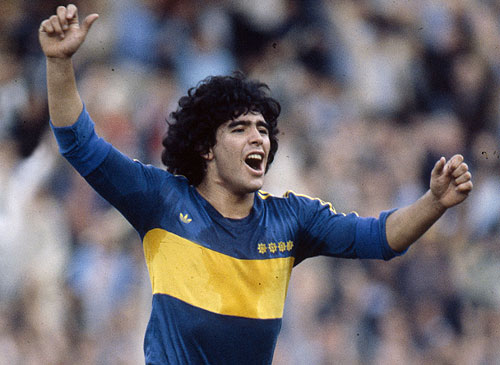
The most important players throughout the history of Boca Juniors are:


Juan Román Riquelme

Diego Armando Maradona

Gabriel Batistuta

Carlos Tévez


Martín Palermo

Bruno Blas, Felipe Tozzini and Agustín Converso - 3rd Year


Thursday, August 20, 2015

SPORTS: PROS & CONS

When we think about sports, there are almost no disadvantages presented. We see famous sports stars, like Lionel Messi or Manu Ginóbili enjoying their fame and opportunity to change things in the world. 
But, is there any negative aspect when referring to sports? We started investigating about this and found out that things are not always easy and that –sometimes- a great sacrifice must be done. 

Lionel Messi was born on June 24th, 1987, in Rosario, Argentina. As a young boy, he tagged along when his two older brothers played soccer with their friends, unintimidated by the bigger boys. At the age of 8, he was recruited to join the youth system of Newell’s Old Boys, a Rosario-Based Club.
Recognizably smaller than most of the kids in his age group, Messi was eventually diagnosed by doctors as suffering from a hormone deficiency that restricted his growth.

To help him, Messi’s parents decided to start a regimen of nightly growth-hormone injections for their son, though it soon proved to be impossible because they had to play several hundred dollars per month for the medication.
So, at the age of 13, when Messi was offered the chance to train at soccer powerhouse FC Barcelona’s youth academy -La Masia- and have his medical bills covered by the team, Messi’s family picked up and moved across the Atlantic to make a new home in Spain. 


Here’s where his career began and where he became the famous football star admired by almost everyone.

As we can see, for Lionel to become the Messi known worldwide, he and his family had to make sacrifices and leave their homeland. As a child, he had to put up with daily injections and pain produced by the treatment.

After getting to know Lio's personal story, we asked ourselves whether there could be negative aspects about sports, such as the ones presented during Messi’s childhood.
With this idea in mind, we decided to interview two of the Physical Education (P.E.) teachers at school. Here’s what they had to say. 

Interviewing Soledad
BerthoTimes: When did you decide to be a P.E. teacher?
Sole: Well, I’ve always loved sports and when I finished the primary school I had already decided to be teacher. I always loved sports and teaching.

BT: Do you specialize in a particular sport?
Sole: Not really, I love dancing so I always teach my pupils (girls) rhythmical and artistic gym.

BT: What is your favourite thing about sports?
Sole: I like the comradeship. And I like team sports.

BT: Is it difficult to work with adolescents? Why?
Sole: Sincerely? Yes, because they are rebellious and it’s hard to put them limits.

BT: Is there any sport with more benefits than the rest?
Sole: Yes, in fact swimming and athletics are the most complete sports.

BT: Are there any negative things about sport?
Sole: When the sport is high performance, people don’t think in their bodies. Sometimes people think the achievement is more important than all the bad things that could happen to their bodies.

BT: Is there any risky sport for you?
Sole: I don’t like boxing because I don’t like watching people hitting each other; but is considered a sport.
Interviewing Gabriel
BT: Is it hard to work with children?Gaby: It’s not hard but sometimes you have to be patient; respect that, each stage has its things and complications and you have to know how to handle those issues.

BT: When did you decide to be a P.E. teacher?
Gaby: Since I was in the first year at the secondary school because I liked sports and teaching.

BT: Do you specialize in any sport?
Gaby: Yes, football.

BT: Have you got any favorite sport star?
Gaby: Yes, of course. Batistuta is my favourite player because I liked how he behaved in the football field and all the scores he made.

BT: Are there any negative aspects about sports?Gaby: The competition, because people can do anything just to win and they forget about the team spirit sports inspire.

BT: Is there any risky sport?Gaby: Yes, extreme sports; they give you a huge rush of adrenalin. Some people like that, although it could be dangerous.
After talking to them, we can now guess which are the sports pros and cons:

PROS 
  • You get fit 
  • You can become a millionaire Sports star like Lionel Messi 
  • You get to visit other countries, learn different languages and cultures 
  • You do what you like doing 
  • You’ll stay healthy 
CONS
  • Possible dehydration 
  • You may have to leave your family or homeland behind 
  • You can be injured 
  • Tiredness 
  • Muscular pain 
  • Unhealthy competition 
When we talk about sports we generally think about the healthy side of everyday life. This is mostly true, because doing sports improves the quality of life. However, we must never forget that –to stay healthy- we have to respect our own limits, respect other people’s abilities and play fairly.

Abril Ludueña, Sofía Clocchiatti and Florencia Romero - 3rd Year 

Tuesday, August 11, 2015

THE LIBERTADORES CUP


The Libertadores Cup was created on 1960. Before, it was known with the name of ‘Champions Cup of America’. It's called ‘The Libertadores Cup’ in honor to Jose de San Martín, Don Pedro I, Simón Bolivar, José Gervasio Artigas, José Miguel Carrera and Miguel Hidalgo Costilla. 

On 1960, Peñarol won against Olimpo and became the first champion of the cup.

The country with more wins is Argentina, with 23: Independiente is the first winner of cups with 7; Boca has 6 and Estudiantes de La Plata, 4.
San Lorenzo, Estudiantes, Boca Juniors, Racing, Huracán and River Plate have played it.

The Libertadores Cup of America is scheduled to continue in July, on semifinals with the participation of Argentinean, Paraguayan, Mexican and Brazilian teams. The quarter finals were completed last May and the tournament stopped to give place to the American Cup, a competition for national teams.

River won the match against Cruzeiro of Brazil in quarter finals and Guarani won against Racing Club. Tigre left out the Ecuadorian team Elemec and Internacional won the quarter finals against Independiente of Santa Fe.

Playing semifinals are River Plate (Argentina), Guaraní (Paraguay), Tigres (Mexico) and Internacional (Brazil). They will face each other and the winners are playing on a day to be confirmed by the South American Confederation of Football.

On July 14th, the semifinals were played. River Plate (Argentina) played against Club Guaraní (Paraguay). The ‘Millionaires’ won 2-0 with goals by Gabriel Mercado and Rodrigo Mora. 

The other semifinal was played the following day in the city of Porto Alegre, where Tigres (México) won against Internacional (Brazil). 

A week later, Guaraní was left out by River Plate; and the dream ended for Internacional when Tigres finally won the match. 

The moment everyone was expecting arrived, and Tigres had to face River Plate on the finals. 

After two matches, River Plate won 3-0 with goals by Alario, Funes Mori and Sánchez. 

When the match ended, River fans went to the Obelisk where they celebrated their victory, after 19 years of waiting for a Libertadores Cup.


Jazmín Mendoza, Tobías Zavalía, Brian Converso, Matías Bruno, Lautaro Morano, Sol Bidondo – 4th Year

THE FIVE GIANTS


How many times did we hear people talking about the 'Five Giants' of Argentinean football? How come these five are the ones chosen to be 'giants'? 

In 1934, when the Argentinean Association of Football (AFA) was created, the most popular clubs wanted to have more power to make important decisions, such as the election of the president of the AFA, the approval of materials used within the football field and so on. 

In a reunion, which took place on 5 August of 1937, they decided to establish a proportional votes system. Following this new system, the clubs were divided into three categories, according to the number of associates and championships won. 

The clubs that had more than 15000 people associated, 20 years of consecutive participation in the first division and had been champions of that category 2 or more times, had three votes. 

Those clubs with more than 10000 associates but less than 15000; or those that had been champions of the first division once only, had two votes.

The clubs that didn't cover the previous requirements only had one vote.

Boca Juniors, Independiente, Racing Club, River Plate and San Lorenzo were the five clubs that had the opportunity of voting three times. Because of this, they're called ‘The Five Giants’. 

But people often discuss about this, which teams are the five giants for you?


Emiliano Colombo, Ignacio Lauzao, Facundo Paiz, Franco Henriquez – 4th Year

Thursday, August 6, 2015

A BRIEF HISTORY OF THE UEFA CHAMPIONS LEAGUE


The UEFA Champions League, known simply as the Champions League, is an annual continental club football competition organized by the Union of European Football Associations (UEFA) and contested by top-division European clubs. It is one of the most prestigious tournaments in the world and the most prestigious club competition in European football, played by the national league champion (and, for some nations, one or more runners-up) of each UEFA national association. The final of the 2012–13 tournament was the most watched UEFA Champions League final to date, as well as the most watched annual sporting event worldwide in 2013, drawing 360 million television viewers.

Introduced in 1992, the competition replaced the European Champion Clubs' Cup, or simply European Cup, which had run since 1955, adding a group stage to the competition and allowing multiple entrants from certain countries. The pre-1992 competition was initially a straight knockout tournament open only to the champion club of each country. During the 1990s, the format was expanded, incorporating a round-robin group stage to include clubs that finished runner-up of some nation's top level league. 

While most of Europe's national leagues can still only enter their national league champion, Europe's strongest national leagues now provide up to four teams for the competition, and will provide up to five teams from the 2015–16 season onwards. Clubs that finish next-in-line in each nation's top level league, having not qualified for the UEFA Champions League competition, may be eligible for the next level UEFA Europa League competition.

In its present format, the UEFA Champions League begins in mid-July with three knockout qualifying rounds and a play-off round. The 10 surviving teams enter the group stage, joining 22 other teams qualified in advance. The 32 teams are drawn into eight groups of four teams and play each other in a double round-robin system. The eight group winners and eight runners-up proceed to the knockout phase that culminates with the final match in May. The winner of the UEFA Champions League qualifies for the UEFA Super Cup and the FIFA Club World Cup.

The last winner of this tournament was FC Barcelona, after winning 3-1 against Juventus, with scores made by Rakitic, Suárez and Neymar. It was one of the most watched matches throughout history. 


Ezequiel Bruno, Nicolás Veintemilla, Luciano Pereira, Kevin Sangregorio and Damián Albariño – 3rd Year